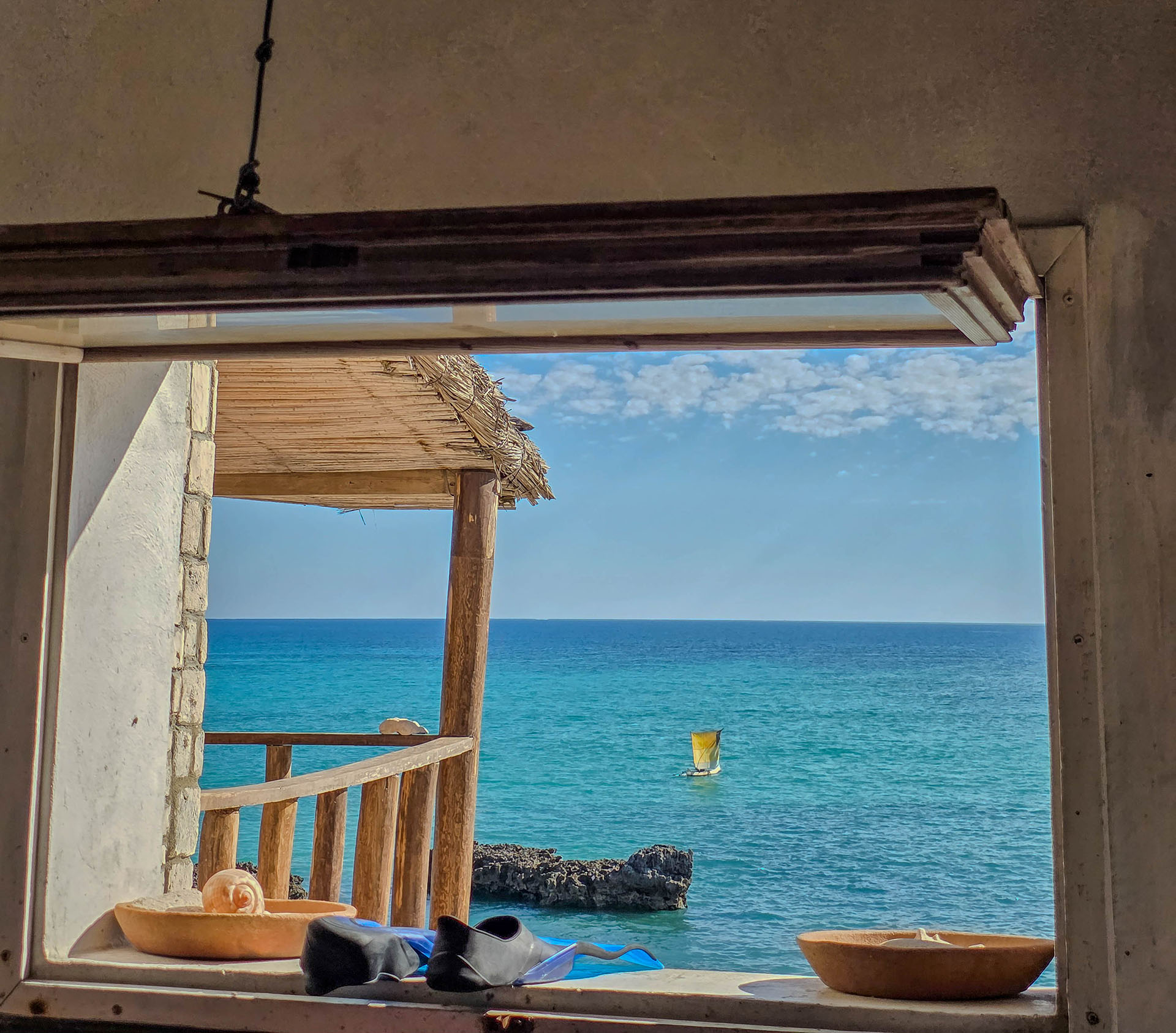
After days of dust, bends and forest, the sea feels like a reset. The air changes first: it is softer, it smells of salt, and everybody in the car gets quieter. Then the road tops a rise and there it is, a flat line of blue that goes on until it meets the sky.
The picture at the top was taken through a window at Andavadoaka, far up the south-west coast, with the snorkelling fins left on the sill and a small sailing pirogue drifting on the water. I like it because it says everything about a good day at the coast: nothing is planned, and nothing needs to be.
Three beaches on one coast
The south-west of Madagascar is dry, bright and wide open. The people who live on this shore are mostly Vezo, fishing families who spend more time on the water than on land, and the pirogues with their patched cotton sails are part of every view. I know three places here well enough to recommend them: Anakao, Saint Augustin and Andavadoaka. Anakao is my favourite, so it gets most of this page.
Anakao, my first choice
Getting there
Anakao sits about 40 km south of Tulear (Toliara), but you don't drive there. The journey from Antananarivo to Tulear covers approximately 950 km by road, and it can be enjoyed over 8 to 10 days with sightseeing stops along the way. From Tulear there is a 35 to 40 km boat transfer to Anakao, taking around one hour.
At low tide the boat can't come right up to the beach, so you may start with a short ride on an oxcart to reach it. It is a good first reminder that you have left the main road behind. I check the tides and the weather before I confirm any crossing, and I keep some margin in the schedule for the unexpected.
Plan at least two nights. One night is just enough time to arrive and leave. Two nights give you a full day with nothing to do, and that is the day people remember.
On the water
The most natural way to see this coast is from the water. Two small islands, Nosy Ve and Nosy Satrana, lie just offshore. Nobody lives on them, they are protected, and they make an easy day trip by pirogue. If the sea is calm, you can snorkel off the reef, and even a quiet swimmer will see fish in colours they would not believe. Bring your own mask if you are particular about the fit.
A word about safety. Currents can be strong near channels and river mouths, and the tide changes how deep the water is. I always ask the boatman and the people who live there before anyone gets in, and children and weaker swimmers wear a life jacket. It costs nothing and takes a minute.
On the sand, and in the evening
Between swims, walk along the beach. The tide changes the shore twice a day, and sandbars and rock pools appear and disappear. In the evening there is nothing better than a table on the sand.
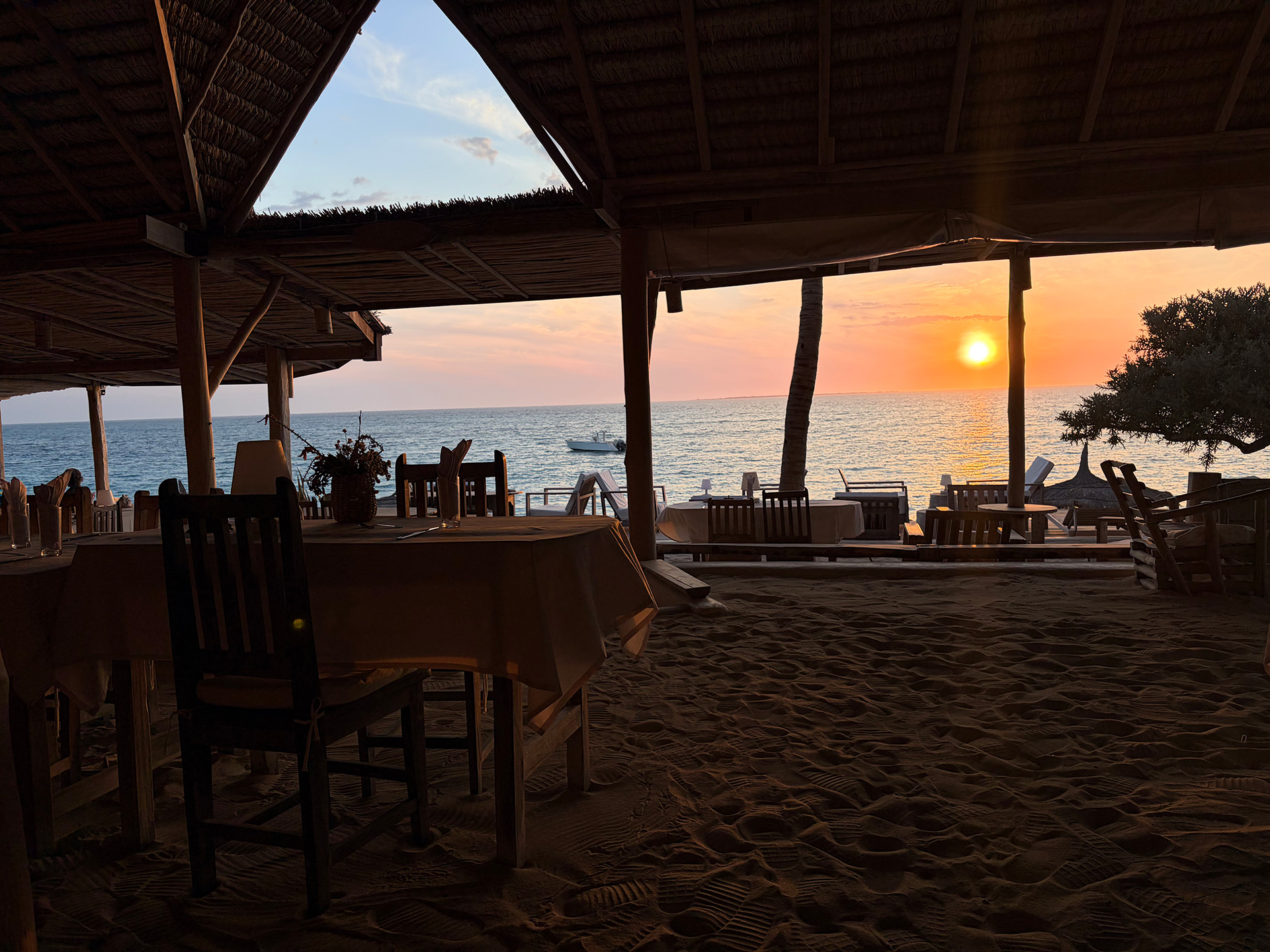
Dinner is usually whatever came out of the sea that morning, grilled with lime and served with rice. This is one of the beach restaurants at sunset. The sky goes orange, then pink, then fills with stars, because there are almost no lights.
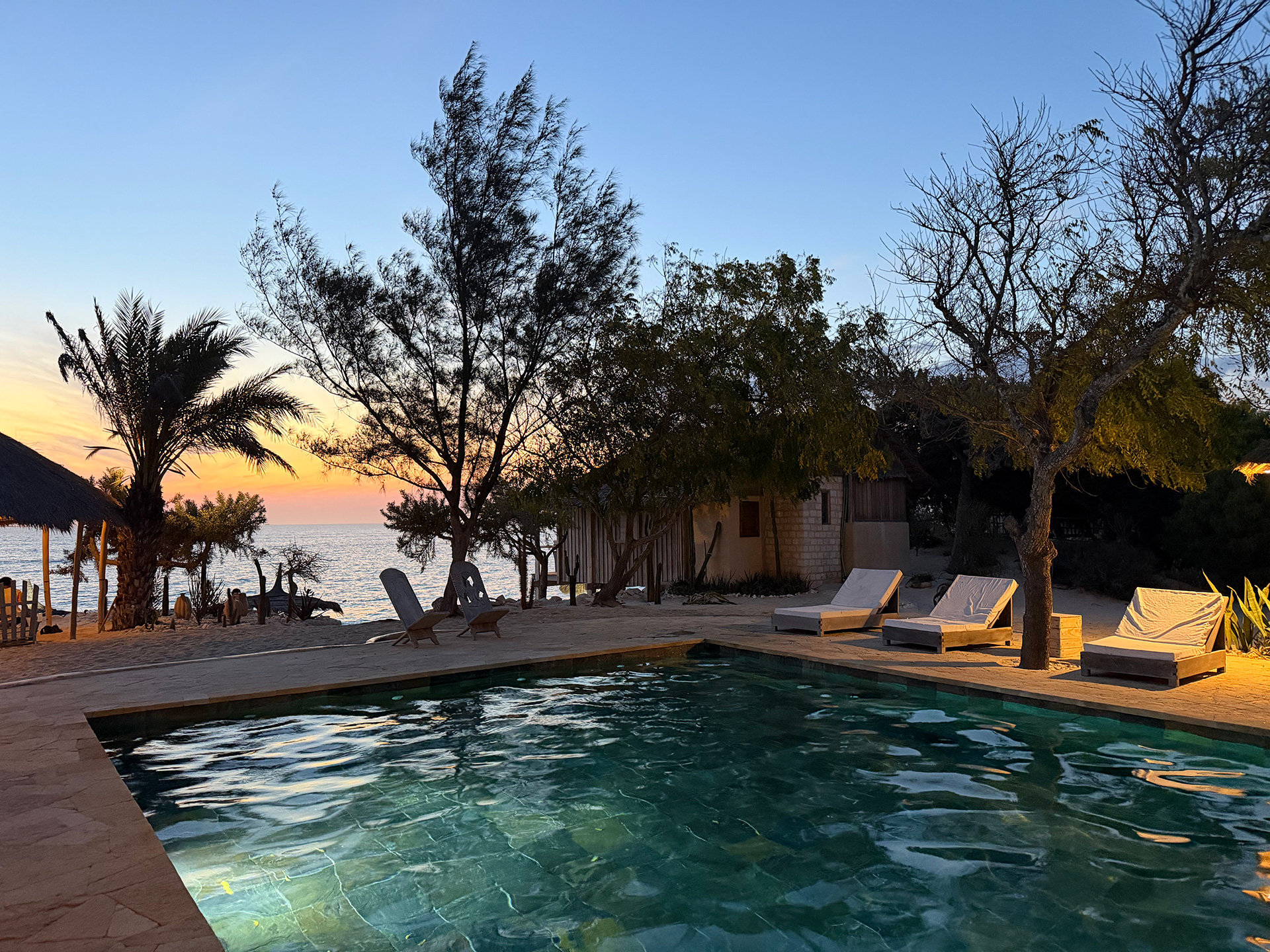
If you prefer a quieter evening, many lodges here have a small pool facing the sea, like this one. It is a very good place to read, or to do nothing at all after a long drive.
The Vezo and their tombs
Along the coast you will see Vezo tombs, decorated with oars and zebu horns, so that the dead keep what mattered to them in life. They are sacred places. Ask your guide or the village before you go close, never climb on them, and take photos only if you have been given permission.
Saint Augustin, a bay with a past
Saint Augustin lies a little south of Tulear, at the mouth of the Onilahy river. The bay is wide and shallow, and when the tide goes out boats are left lying on the sand, like the one in this photo.
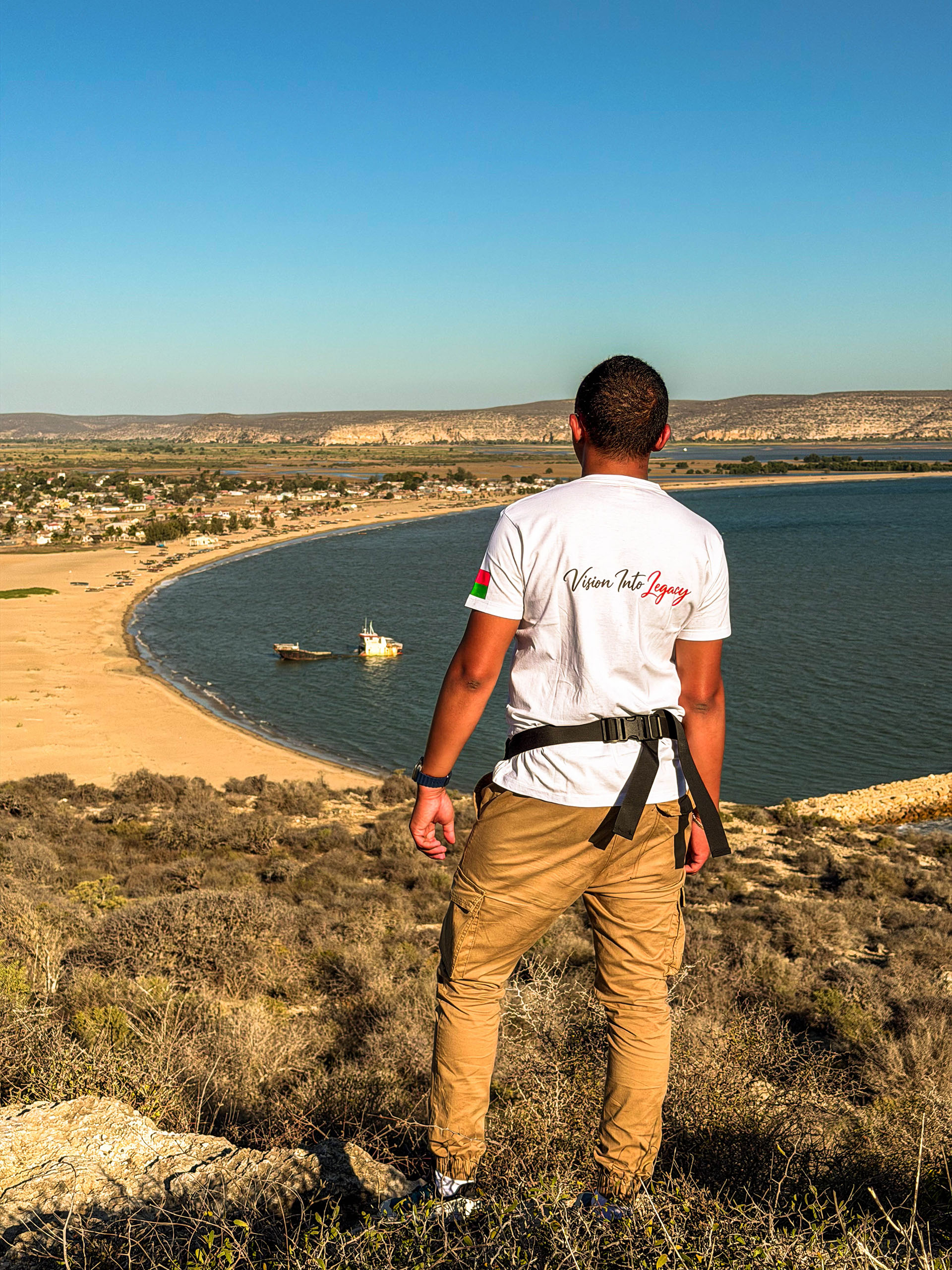
The place has more history than its sleepy look suggests. In 1645 the English tried to found a colony here, and early in the eighteenth century the bay was known as a haunt of pirates. Today it is quiet, and the village lives from fishing. It is a good stop for an afternoon walk and a swim, or for a night if you want to be even further from the crowd.
Saint Augustin is about 40 km from Tulear, and the drive takes around 35 minutes to an hour, depending on the state of the track.
Andavadoaka, for the reef
Andavadoaka is much further north, about 45 km south of Morombe. It is a different kind of trip, with fewer visitors and a longer road. The village is known for its coral reefs and for something rarer: it was one of the first places in Madagascar where the community decided to manage its own part of the sea, closing some fishing areas so that the reef and the fish could recover. That work won it an international prize in 2007.
That is where the picture at the top was taken, through the window of a room by the water. Snorkelling here is the main reason to come: the reef is rich, and the water is clear.
How I plan two or three days
The first day is for arriving and doing very little. We get in, drop the bags, and people usually walk straight to the water. I don't plan anything else, because after a long road a bench in the shade is already a good programme.
The second day is the active one. We go out on the water in the morning, when the sea is calmest, then rest through the heat of midday and swim or walk again when it cools down. If there is a third day, I keep it slow. A late breakfast, one last swim, a conversation with the people who run the lodge, and only then the way back.
Most of my travellers tell me afterwards that this was the part of the trip they had not expected to love. I don't think any of them has asked to leave earlier.
When to go
The dry season, roughly May to October, is the best time for the coast: sunshine, calm mornings and very little rain. From January to March it is hot, wet and cyclone season, and I avoid planning beach stops in those months. The photos in this article were taken in June and September. Winds often pick up in the afternoon, so mornings are best for boat trips and snorkelling.
What to pack
Respecting the place
A few simple rules. Never stand on the coral, and don't take shells or coral home. Ask before you photograph someone, and keep your distance from the tombs. Pay a fair price for boat trips and meals. These small coastal communities live from the sea, and we are guests in their front yard.
Quick answers
How do I get to Anakao from Tulear?
By boat. It is a 35 to 40 km crossing that takes around one hour, and at low tide you may need a short oxcart ride to reach the boat. I arrange it for you.
Can I visit all three places on one trip?
Anakao and Saint Augustin are both near Tulear, so they combine easily. Andavadoaka is far to the north, so I treat it as a separate trip, or as a stop on a longer journey up the coast.
Do I need to book boat trips in advance?
Usually you can arrange them locally the day before, and I take care of that for you. In the high season it is better to ask early.
What if it rains?
In the dry season, rain on the coast usually passes quickly. If the sea is too rough for boats, we walk, rest or visit the village instead. A flexible plan is the best plan.
Thinking about ending your trip by the sea? Tell me when you are travelling and I will suggest where to go. You can also read about the road that gets you there in On the road to Isalo, or see my guiding services.